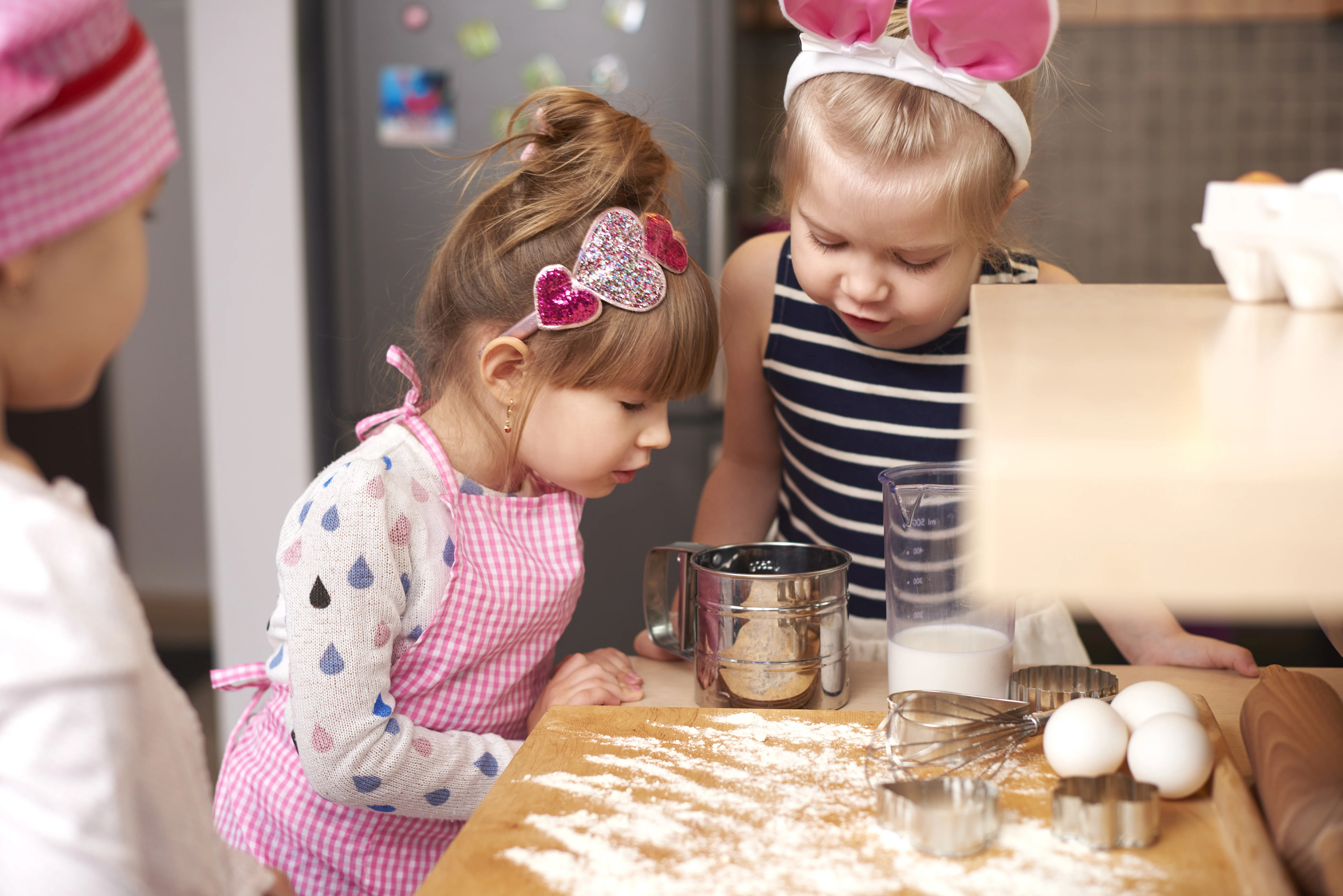
Your toddler already wants to help in the kitchen. They're reaching for the spoon, grabbing at ingredients, and standing on tiptoe to see what's happening on the counter. That curiosity isn't a nuisance — it's an invitation.
Cooking with toddlers builds fine motor skills, introduces math and science concepts, expands vocabulary, and creates the kind of bonding time that both of you will remember. It also makes adventurous eaters — children who help prepare food are far more likely to actually eat it.
Yes, it will be messier than cooking alone. And slower. But with the right setup, realistic expectations, and a few age-appropriate tasks, cooking with your toddler can become one of the best parts of your week.
At CocinarTe, we've taught hundreds of young children to cook through our Chefcitos Together family classes in Hillsboro, Oregon. We've seen toddlers as young as 3 crack eggs, roll dough, and proudly eat empanadas they made with their own hands. This guide shares what we've learned about getting little ones involved in the kitchen safely and joyfully.
Why Cooking with Toddlers Is Worth the Mess
Developmental Benefits
The kitchen is one of the richest learning environments in your home. When your toddler cooks, they're building skills across every developmental area without realizing it:
- Fine motor skills — Stirring, pouring, tearing, squeezing, and mashing all strengthen the hand muscles needed for writing and drawing later
- Math concepts — Counting eggs, measuring cups, comparing "more" and "less," and observing how ingredients change quantity when combined
- Language development — Naming ingredients, learning action words (stir, pour, mix, squeeze), following step-by-step instructions, and describing textures and flavors
- Science basics — Watching butter melt, seeing batter transform into pancakes, observing how mixing changes colors and textures. The kitchen is a toddler's first science lab
- Sensory exploration — Feeling dough, smelling herbs, tasting new flavors. Cooking engages every sense in ways that screens and toys cannot
Life Skills and Confidence
Beyond academics, cooking builds the kind of practical confidence that carries into everything else a child does:
- Independence and self-reliance — "I can do it myself" is a toddler's favorite sentence, and the kitchen is one of the best places to let them prove it
- Healthier eating habits — Research consistently shows that children who participate in preparing food are more willing to try new ingredients. A toddler who mashes the avocado is far more likely to eat the guacamole
- Patience and sequencing — Following a recipe teaches that things happen in order, and that waiting is part of the process
- Self-esteem — There's nothing quite like a 2-year-old's pride when they announce to the family, "I made this!"
Cultural Connection
Cooking is one of the most natural ways to share family heritage and cultural traditions with young children. Recipes carry stories — where your family comes from, what holidays taste like, what your grandmother made on Sunday mornings.
Latin American cuisine is especially well-suited for cooking with toddlers. Many traditional recipes are deeply hands-on: rolling tortillas, mashing beans, assembling arepas, pressing empanada edges, squeezing limes. These aren't just meals — they're sensory experiences that connect children to culture through touch, smell, and taste.
Age-Appropriate Cooking Tasks for Toddlers
The key to cooking with toddlers is matching the task to the child. Here's what most children can handle at each stage — though every child is different, so follow your toddler's lead.
Ages 18 Months to 2 Years
At this age, keep tasks simple, sensory, and closely supervised. Your toddler is learning cause and effect — "I pour, it goes in the bowl" — and that's more than enough.
- Tearing lettuce, herbs, or bread into pieces
- Stirring cold ingredients in a large bowl (use a heavy bowl that won't slide)
- Placing toppings on pizza, toast, or crackers
- Washing fruits and vegetables in a bowl of water
- Pouring pre-measured ingredients into a bowl
- Mashing soft foods with a fork (bananas, avocado, cooked sweet potato)
- Shaking a closed container to mix ingredients
Can you cook with a 2-year-old? Absolutely. Just keep it to one or two tasks per session, and accept that most of the "cooking" is really exploring. That's exactly what it should be.
Ages 2 to 3 Years
By 2, most toddlers have better hand coordination and longer attention spans. You can start introducing slightly more complex tasks:
- Everything listed above, plus:
- Spreading soft ingredients with a butter knife or small spatula
- Rolling dough with a small rolling pin (tortillas, cookies, empanadas)
- Scooping and dumping ingredients with measuring cups
- Peeling bananas and oranges
- Shaking seasonings onto food
- Mixing batter with a spoon or small whisk
- Snapping green beans or asparagus
- Pressing cookie cutters into soft dough
This is the age where "helping" starts to feel like actual participation. Let them do as much as they can — even when it's imperfect.
Ages 3 to 4 Years
Three- and four-year-olds can handle real kitchen responsibilities with supervision. This is also the age when cooking starts to click as a multi-step activity rather than a single task.
- Everything listed above, plus:
- Cutting soft foods with a kid-safe knife (bananas, strawberries, cooked vegetables)
- Kneading dough with both hands
- Cracking eggs into a bowl (this takes practice — and cleanup)
- Using cookie cutters and pressing dough edges
- Assembling simple recipes independently (wraps, sandwiches, fruit kabobs)
- Measuring ingredients with cups and spoons
- Juicing citrus fruits with a hand juicer
- Whisking eggs or light batters
By age 3 or 4, your child can genuinely participate in making a full recipe from start to finish — with you guiding each step.
Kitchen Safety Rules for Cooking with Toddlers
Cooking with a toddler requires more preparation than cooking alone, but the safety basics are straightforward:
- Always supervise directly — Never leave a toddler alone in the kitchen, even for a moment. Stay within arm's reach during any task
- Keep hazards out of reach — Sharp knives, hot surfaces, heavy pots, and cleaning chemicals should be well out of the toddler's zone
- Use a sturdy step stool or learning tower — Your toddler needs to be at counter height to participate. Make sure whatever they stand on is stable and won't tip
- Teach "hot" and "sharp" early — These are two of the most important vocabulary words in the kitchen. Use them consistently and clearly
- Start with no-cook or cold recipes — Build confidence and routine before introducing any heat. Guacamole, fruit salad, and sandwich assembly are perfect first recipes
- Create a "toddler zone" — Set up their workspace away from the stove and oven. A section of counter or a low table works well
- Use kid-safe tools — Plastic knives, small whisks, silicone spatulas, and sturdy bowls make the experience safer and more manageable
- Hand-washing is step one and step last — Make it a non-negotiable ritual that bookends every cooking session
5 Easy Recipes to Make with Your Toddler
These recipes are tested, toddler-approved, and designed so your child does most of the work. Each one takes 15 minutes or less of active toddler time.
1. Guacamole (No Cook)
Toddler tasks: Mashing avocado with a fork, squeezing lime with a hand press, stirring in ingredients, tasting as they go.
Why it works: It's entirely hands-on, requires zero heat, and toddlers love the mashing. Plus, they'll eat it because they made it — even the ones who "don't like green food."
You'll need: 2 ripe avocados, 1 lime, a pinch of salt, and optional add-ins (diced tomato, cilantro). Serve with tortilla chips.
2. Fruit Salad with Lime and Honey
Toddler tasks: Tearing mint leaves, squeezing lime, stirring fruit together, tasting every other piece.
Why it works: It's colorful, refreshing, and the reward is instant. No waiting, no cooking — just assembling and eating.
You'll need: Whatever fruit you have (berries, mango, banana, grapes cut in halves), juice of 1 lime, a drizzle of honey, and a few mint leaves.
3. Mini Quesadillas
Toddler tasks: Sprinkling shredded cheese on tortillas, placing toppings (beans, corn, diced peppers), folding the tortilla in half.
Parent handles: The stovetop, griddle, or quesadilla press.
Why it works: Quick, customizable, and universally loved. Let your toddler choose their own toppings and they'll eat every bite.
4. Banana Pancakes (2 Ingredients)
Toddler tasks: Mashing banana, cracking an egg (with help), stirring batter, pouring batter from a measuring cup.
Parent handles: The griddle or pan.
Why it works: Only two ingredients (1 banana + 1 egg), so there's almost nothing to measure. Toddlers love watching batter turn into something they can eat — it's cause-and-effect magic.
5. Empanada Dough Shapes
Toddler tasks: Rolling dough with a small rolling pin, pressing cookie cutters into dough, pinching edges closed, brushing with egg wash.
Parent handles: Baking (if you're making edible empanadas) or just let them play with the dough as-is.
Why it works: It's like play-dough, but edible. The sensory experience of kneading and shaping dough is deeply satisfying for toddlers. And if you bake them, the payoff is even sweeter.
This is also a beautiful way to introduce your child to Latin American food traditions. Empanadas are made across Central and South America — each country with its own fillings and shapes. Even a 2-year-old can start learning that food tells a story.
Tips for Making It Fun (Not Frustrating)
The difference between a great cooking session and a stressful one usually comes down to parent expectations, not toddler behavior. Here's how to set yourself up for success:
- Lower your expectations — The goal is the experience, not the result. A lopsided quesadilla your toddler made is better than a perfect one you made alone
- Give real tasks, not busy work — Toddlers know the difference. Stirring actual batter is engaging. Stirring an empty bowl is not
- Prep ingredients ahead of time — Measure, chop, and organize everything before your toddler joins. In professional kitchens, this is called mise en place. At home, it's called sanity
- Accept the mess — Put a splat mat or towel under the step stool. Dress your toddler in clothes you don't care about. The mess is part of the learning
- Choose your timing carefully — Cook when everyone is rested and reasonably fed. A hungry, tired toddler will not enjoy measuring flour. After a snack and a nap is the sweet spot
- Keep sessions short — 10 to 15 minutes is plenty for an 18-month-old. Even a 3-year-old may tap out after 20 minutes. Follow their lead
- Celebrate the result together — Sit down and eat what you made as a family. That shared moment is the whole point
Ready to Cook Together?
Cooking with your toddler doesn't require professional equipment, gourmet recipes, or a picture-perfect kitchen. It requires a sturdy step stool, a little patience, and the willingness to let things get messy.
Start small. Pick one recipe from this list. Let your toddler mash, pour, stir, and taste. Watch their face when they realize they made something real. That moment — that pride — is worth every grain of spilled flour.
If you'd love for your little one to explore the kitchen with expert guidance and other families, CocinarTe's Chefcitos Together classes are designed for exactly this. Parents and children ages 3 and up cook side by side, learning real recipes rooted in Latin American cuisine — empanadas, arepas, salsas, and more. Every class is hands-on, age-appropriate, and built around the joy of making food together.
Looking for a party your child will actually remember? CocinarTe also hosts cooking birthday parties for kids — check out our guide to the best kids birthday party ideas for more inspiration.
CocinarTe PDX
Kids Cooking School • Hillsboro, Oregon
CocinarTe is a kids cooking school and family experience studio in Hillsboro, Oregon. Through hands-on classes, birthday parties, and cultural cooking experiences rooted in Latin American cuisine, CocinarTe teaches children and families that the kitchen is the best classroom in the house.